
The system
Soil that lives
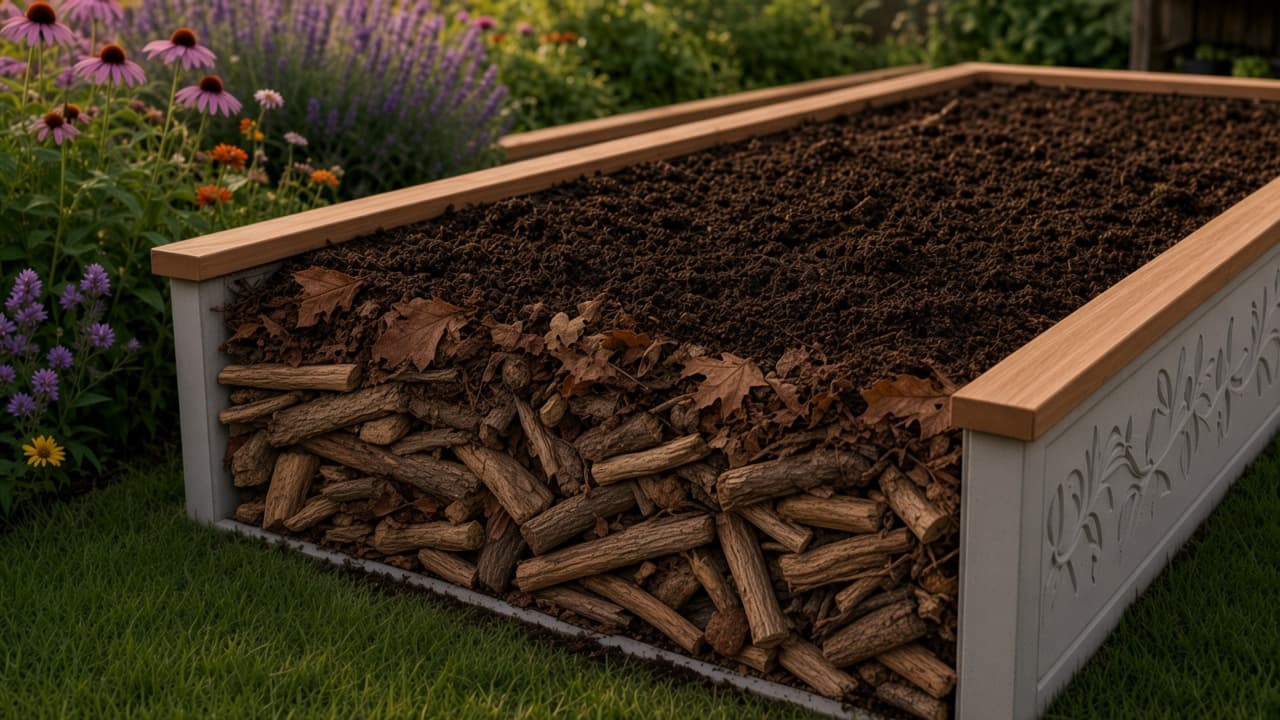
Every bed is a worm bin. Wood, worms, and a vermicast cap — not a bag of potting dirt.
Bed care+$95 / month
Feeding and a health check — rotating corners, cover, moisture, and the herd.
Starting points for a typical bed in Bellevue. The frame is on the raised-bed side.
Get in TouchA garden fails from the soil out. We start there.
The bed is not a box of dirt. It is a living system: wood that holds water, worms that move and amend, a food web the plants can trade with.
After years of synthetics the web is quiet. Repair is slower than a bag of NPK. We put the organisms back, give them a structure that feeds them, then keep feeding the system.
New frames get this build from the first day. Existing beds get the same treatment — soil out, hugelkultur in — so leftover chemistry does not sit under a fresh top-dress.
We build the system once. You feed it, or we come feed it. The plants follow.
01 — New beds, or start over
Prep
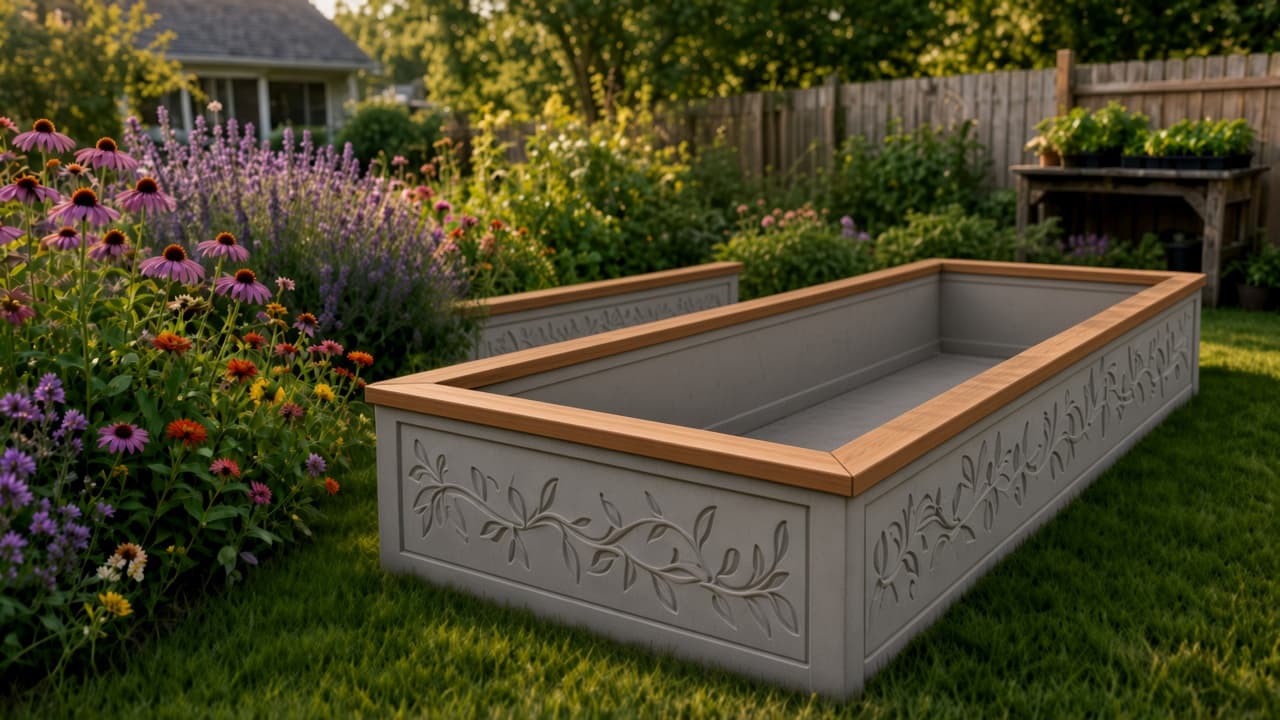
New beds start empty. Existing beds: we take every inch of old soil out and begin again.
Leftover salts, compacted fill, and dead potting mix cannot host a food web. A clean start can. Whether the frame is new or already in the yard, the living-soil system needs a bare interior — not a top-dress over chemistry.
No leftover salts. No compacted dead fill. A clean start for the organisms that do the work.
02 — The engine under the mix
Hugelkultur
Chopped logs, sticks, and leaf litter go in first. The wood is the engine under the growing mix.
As the wood breaks down it holds water, feeds fungi, and slowly collapses into structure. The bed is not a bag of potting dirt sitting on plywood. It is a reservoir and a fungal pantry that keeps working after we leave.
Water stays in the bed. Fungi have food. The fill does not sit lifeless under the plants.
03 — About a thousand compost worms
Red wigglers
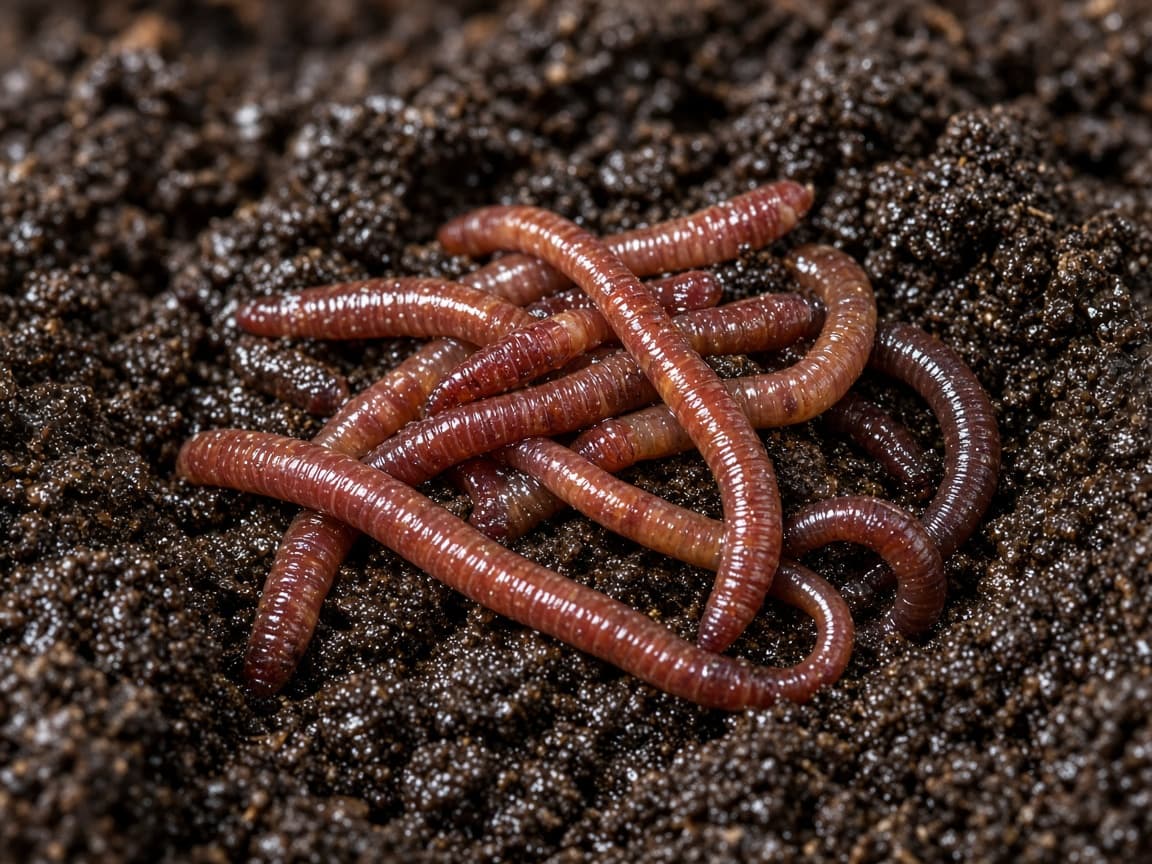
We stock the bed with about a thousand European red wigglers — compost worms, not nightcrawlers.
They live where the residue is rich. They eat decaying scraps and microbes, leave vermicast in place, and open air channels as they travel. From this point the raised bed is its own worm bin.
Continuous amendment. Aeration tunnels. Vermicast made where the roots will be.
04 — Vermicast and compost
The cap
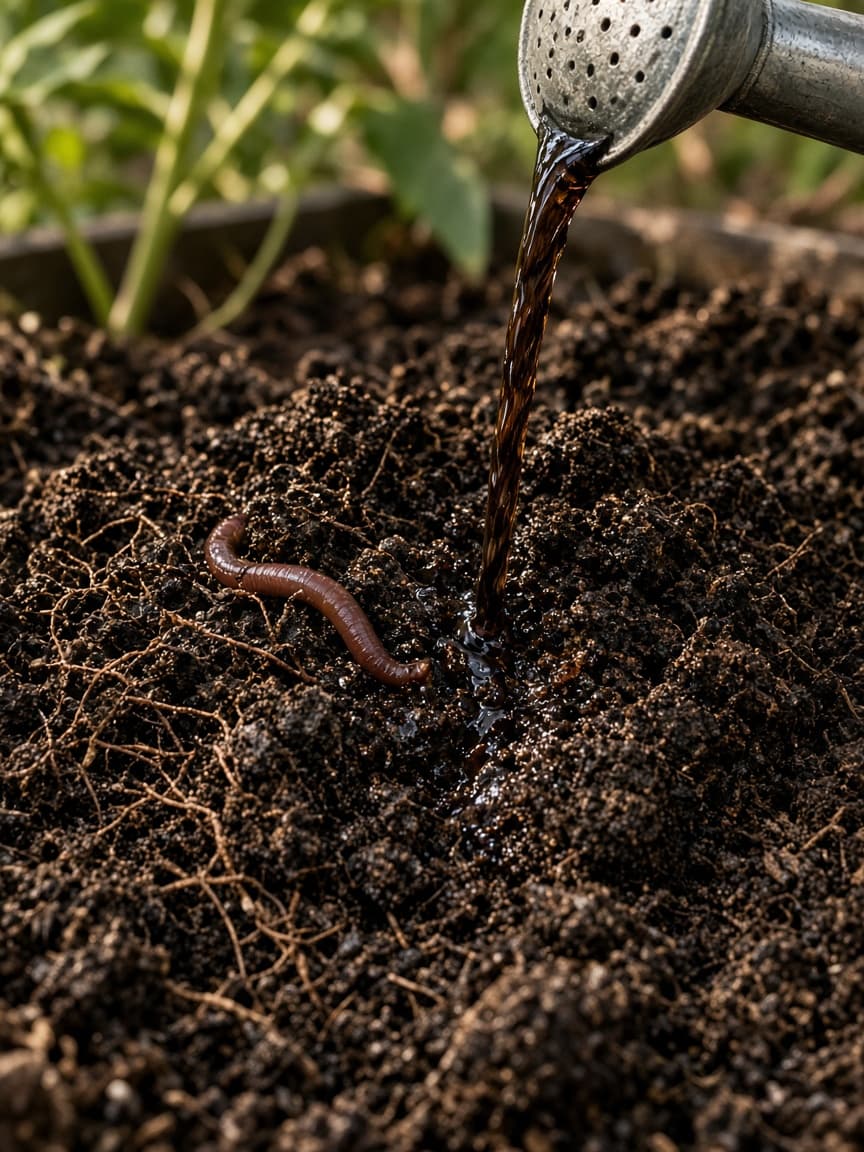
Fresh vermicast and compost close the bed — the layer the plants go into.
Castings carry plant-available minerals, bacteria, and fungal spores in a crumb that will not burn roots. Compost adds bulk and food. The first season has biology to stand on, not leftover salts.
Immediate crumb, microbes, and a moisture blanket over the wood and the herd.
05 — Rotating corners
Feed the system
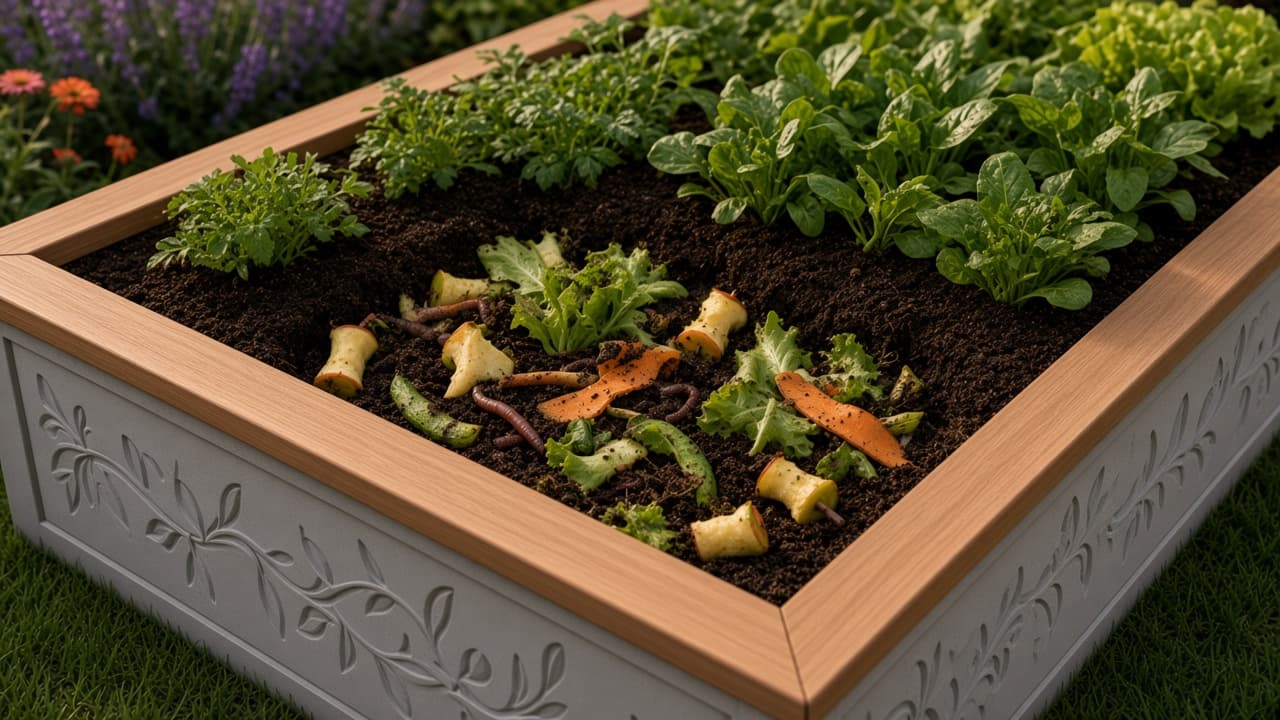
Kitchen scraps go into rotating corners of the bed. The herd migrates to the fresh food.
As they move they amend, aerate, and leave castings behind. You are not fertilizing on a calendar. You are feeding a living system that keeps the soil in motion.
Worms travel the bed. Structure opens. Fertility is made in place, not dumped on top.
After we leave
You feed it, or we do
The rotation is simple: scraps in one corner this week, the next corner the next time. Worms follow the food. Two ways to keep it going.
DIY
We show you the corner rotation before we leave. Kitchen scraps in, a light cover of compost, move to the next corner next time. The herd does the rest.
We feed
Monthly feeding and a health check — same rotation, same cover, no calendar of synthetic fertilizer. Ask when you get in touch.
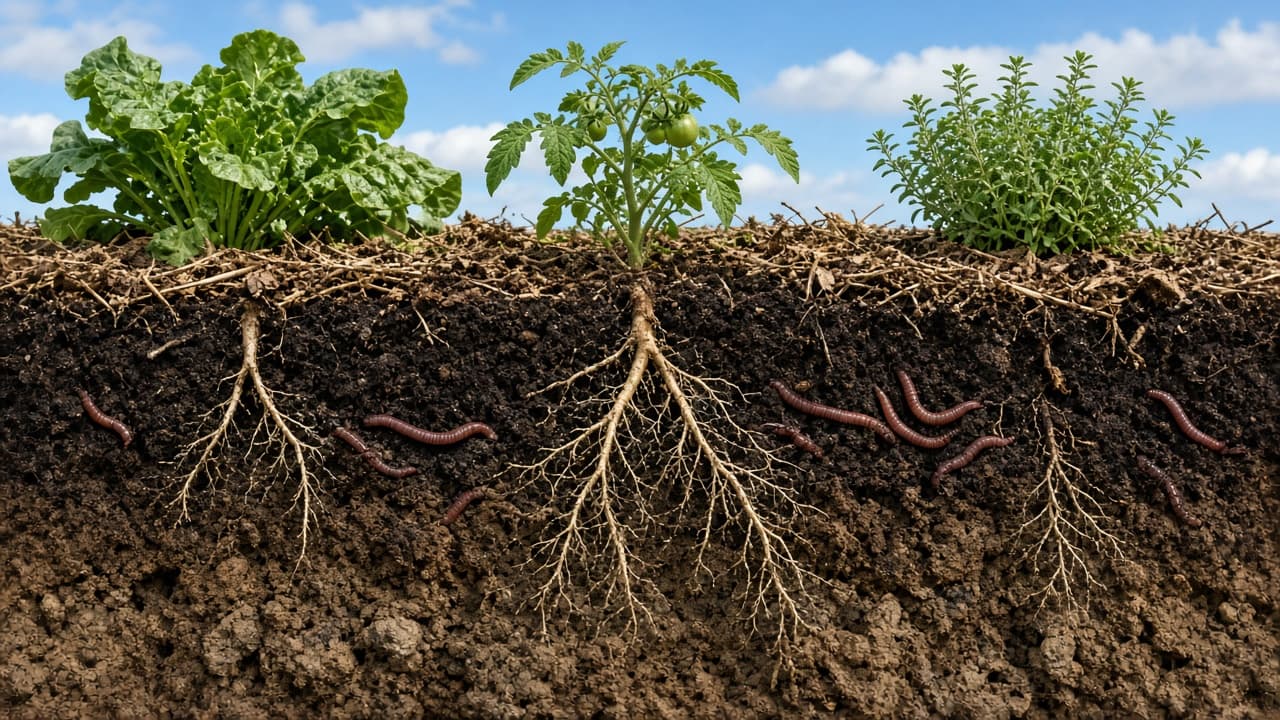
Biology, not salt, does the work.
Plant vigor
Healthy soil shows up first in the leaves.
When the soil food web is intact, plants take up a fuller spectrum of minerals. Leaves look darker, stems stand firmer, and Brix readings climb — not because of a fertilizer dump, but because roots are trading sugars with a living microbiome.
Tap a point to explore the soil food web